
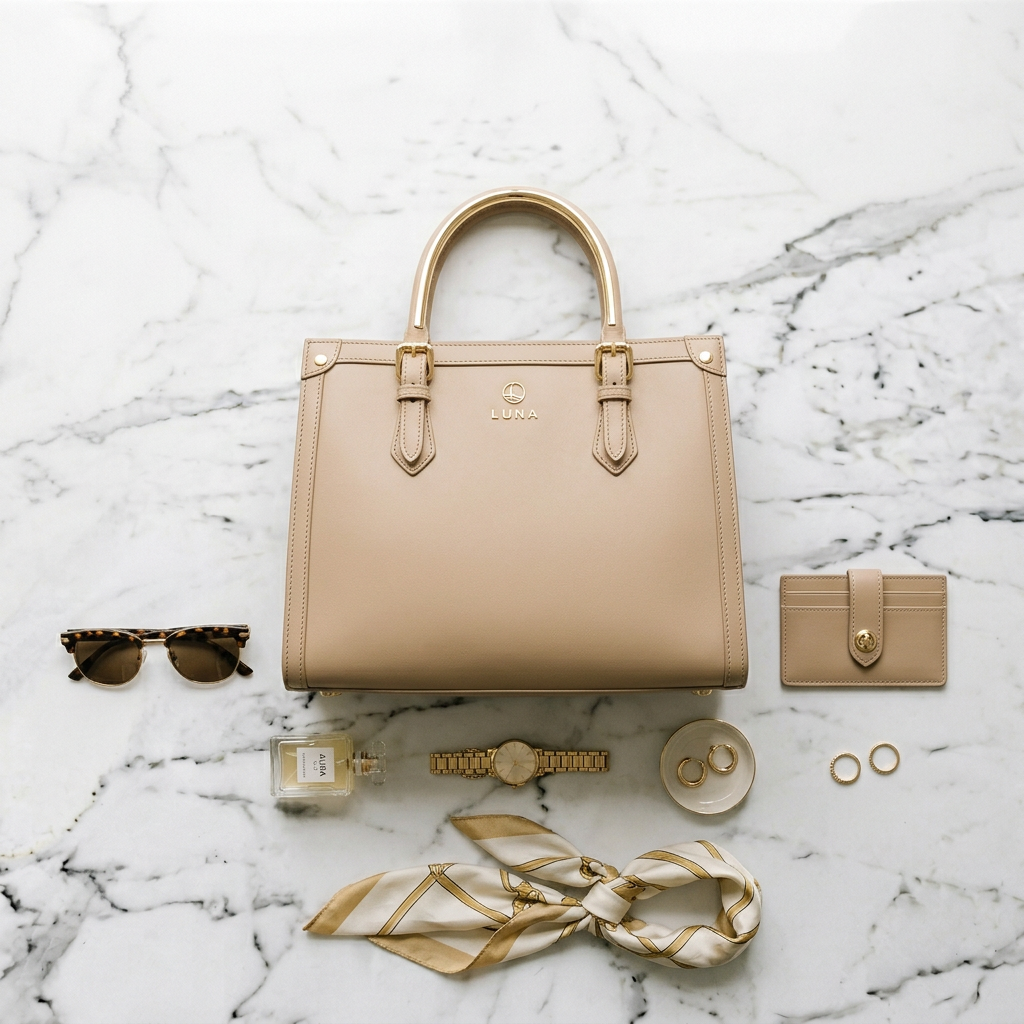
What Should a Designer Tote Actually Do for You?
A tote is the bag that works the hardest and gets chosen the most carelessly. Because the category starts from a simple shape — an open-top rectangle with two handles — it is tempting to think one tote is much like another. In practice, the difference between a tote that becomes your daily default and one that sits in the closet comes down to three measurable factors: weight, interior organization, and how the handles distribute the load. Get those wrong and the bag becomes a burden. Get them right and you barely notice you are carrying it. Knowing how to choose a designer tote bag means testing those three factors against your actual week — which is exactly what this guide walks through.
Which Tote Size and Capacity Do You Need?
Tote sizes are usually quoted by width in inches, but the dimension that matters most for daily use is the interior width at the base — a measurement that sellers rarely publish. Here is what to look for in practice.
Small tote (under 13 inches wide). Fits a tablet, a slim folder, a water bottle, and your everyday essentials. It will not fit a 13-inch laptop horizontally. If you work from a tablet or carry paper files folded in half, this size works. If you carry a laptop every day, move up.
Medium tote (13 to 15 inches wide). The standard daily size. A 13-inch laptop fits horizontally without forcing the bag open. You still have room for a notebook, a small pouch, and a water bottle. Most people who commute with a tote will end up in this range.
Large tote (over 15 inches wide). Useful for travel days, gym clothes, or when you carry documents in full-size folders. The risk with a large tote is that it invites overpacking, and with overpacking comes weight that the shoulder straps were not designed to carry. A large tote works best when you commit to keeping it underloaded.
Structured vs Soft Totes: What Changes in Daily Use?
A structured tote stands upright when set on a surface and holds its shape whether full or half-empty. This matters more than it sounds: a structured tote lets you reach into the bag without holding it open with your other hand, and it protects its contents from being crushed when the bag is on the floor or a seat next to you. The trade-off is that structured totes weigh more and feel more formal.
A soft tote collapses when empty and molds to your body when carried. It is typically lighter and more relaxed in appearance. The downside is interior chaos — without structure, small items migrate to the bottom. A soft tote without at least one internal pocket becomes a pit. If you choose a soft tote, prioritize one with a secured interior section or plan to use pouches to organize the interior yourself.
Which Materials Hold Up to Daily Carry?
Totes bear more weight and rub against more surfaces than any other bag type, so material choice is consequential.
Full-grain leather. The most durable option if you are willing to accept the weight. A full-grain leather tote in the medium-to-large range can weigh 2 to 3 pounds (0.9–1.4 kg) empty. Add a laptop, a notebook, and a water bottle, and you are carrying 6 to 8 pounds on one shoulder. For a daily commute, this is manageable if you alternate shoulders and keep the bag organized. Leather is also repairable — a cobbler can replace worn handles, which coated canvas cannot.
Coated canvas. The lightweight alternative. A coated canvas tote weighs roughly half what a leather tote of the same size weighs, and it shrugs off rain and surface dirt. The durability ceiling is lower — once the coating wears through at the base corners, the bag is not repairable — but for someone who prioritizes lightness over multi-decade longevity, coated canvas is the pragmatic choice.
Canvas and linen blends. Informal, washable, and very light. These work well for weekend and market totes but lack the structure for a professional setting. If your tote transitions between work and weekend, leather or coated canvas holds up better in both contexts.
Work, Weekend or Travel: Matching the Tote to the Job
For work. Choose a structured medium tote in leather or coated canvas with an interior that includes at least one zipped pocket and a laptop sleeve or divider. Handles should be long enough to carry on the shoulder (a drop of at least 8 inches / 20 cm) and thick enough not to dig in when the bag is full.
For weekends. A soft, unstructured tote in canvas or lightweight leather is the better fit here. You are carrying less and moving more casually, so the bag can be more relaxed. An open top is fine for weekend use — you are not navigating a crowded train or a street with unpredictable weather in the same way.
For travel. A large coated-canvas tote works well as a carry-on companion. It is light enough not to eat into airline weight limits, durable enough to slide under a seat, and the open top makes it easy to access a book or a scarf mid-flight. Look for a tote with a snap or magnetic closure rather than a zipper — you want quick access, not security.
A Simple Buyer’s Checklist
- Does the interior width fit your laptop horizontally? Measure your laptop and compare to the bag’s listed width (subtract roughly 1 inch for side seams and structure).
- What is the empty weight? For a daily commute, aim for under 2.5 pounds (1.1 kg) empty if possible.
- Are the handles thick enough? Thin, rolled handles concentrate pressure on a narrow point of your shoulder — wider, flat handles distribute weight better.
- Does the bag have at least one interior secured pocket? An open tote without a zipped interior section is a liability in a city.
- Will the bag stand upright on a surface when half-full? If not, you will need pouches to organize the interior.
In our edit, a few totes consistently earn their place. The Milano Tote balances structure with an approachable weight. The Louis Vuitton Neverfull MM in monogram coated canvas is a lightweight workhorse that has earned its ubiquity for practical reasons. The Gucci Diana Tote bridges formality and function with its clean architectural lines. The Hermès Garden Party is, in essence, a leather tote built to be ignored — in the best way, it does not demand attention, just gets on with the job. And the Classique Canvas Tote is a reliable weekend companion in a canvas that wears in, not out. For outfit ideas, see our guide to styling a tote bag.
What size tote fits a laptop?
A medium tote (13 to 15 inches wide) fits most 13-inch and some 14-inch laptops horizontally. Measure your laptop width and look for a tote whose listed width exceeds it by at least 1.5 inches to account for interior seams and structure.
Are canvas or leather totes more durable?
Leather totes are more durable long-term — they can be repaired by a cobbler and gain character with age. Canvas totes are lighter and washable but cannot be restored once the coating or fabric wears through at stress points.
What makes a tote work-appropriate?
A work-appropriate tote has structure (it stands upright), a medium-to-dark color, handles long enough for shoulder carry, and at least one interior zipped pocket. The material should be leather or coated canvas — canvas-alone totes read as too casual for most professional settings.
How heavy is too heavy for a daily tote?
An empty tote over 2.5 pounds (1.1 kg) becomes noticeably heavy once loaded with a laptop, notebook, and daily essentials. If your loaded tote weighs more than 6 to 8 pounds, consider a lighter material, a smaller size, or a crossbody as your daily bag instead.