
What Makes a Designer Bag Worth Owning?
A designer bag earns its place on three criteria: a design language that reads as distinct and considered rather than borrowed from somewhere else, a level of wearability that means the bag actually leaves the closet, and a sense of lasting relevance — the bag should look as coherent five years from now as it does today. That third criterion is the hardest to judge in the moment, because it requires filtering out what is merely current. But if a bag’s shape, material, and hardware feel like they belong to a longer conversation — the house’s design history, the broader evolution of the category — rather than to a single season, the odds are good that it will hold up.
The ten bags below are not a ranking, because a ranking implies one is better than another, and for bags, “better” depends on who is carrying it and for what. Instead, each entry describes what the bag is, why it has stayed relevant, and who it suits. Taken together, they are our shortlist of designer bags worth owning right now — details and availability sit on each linked listing.
The Ten
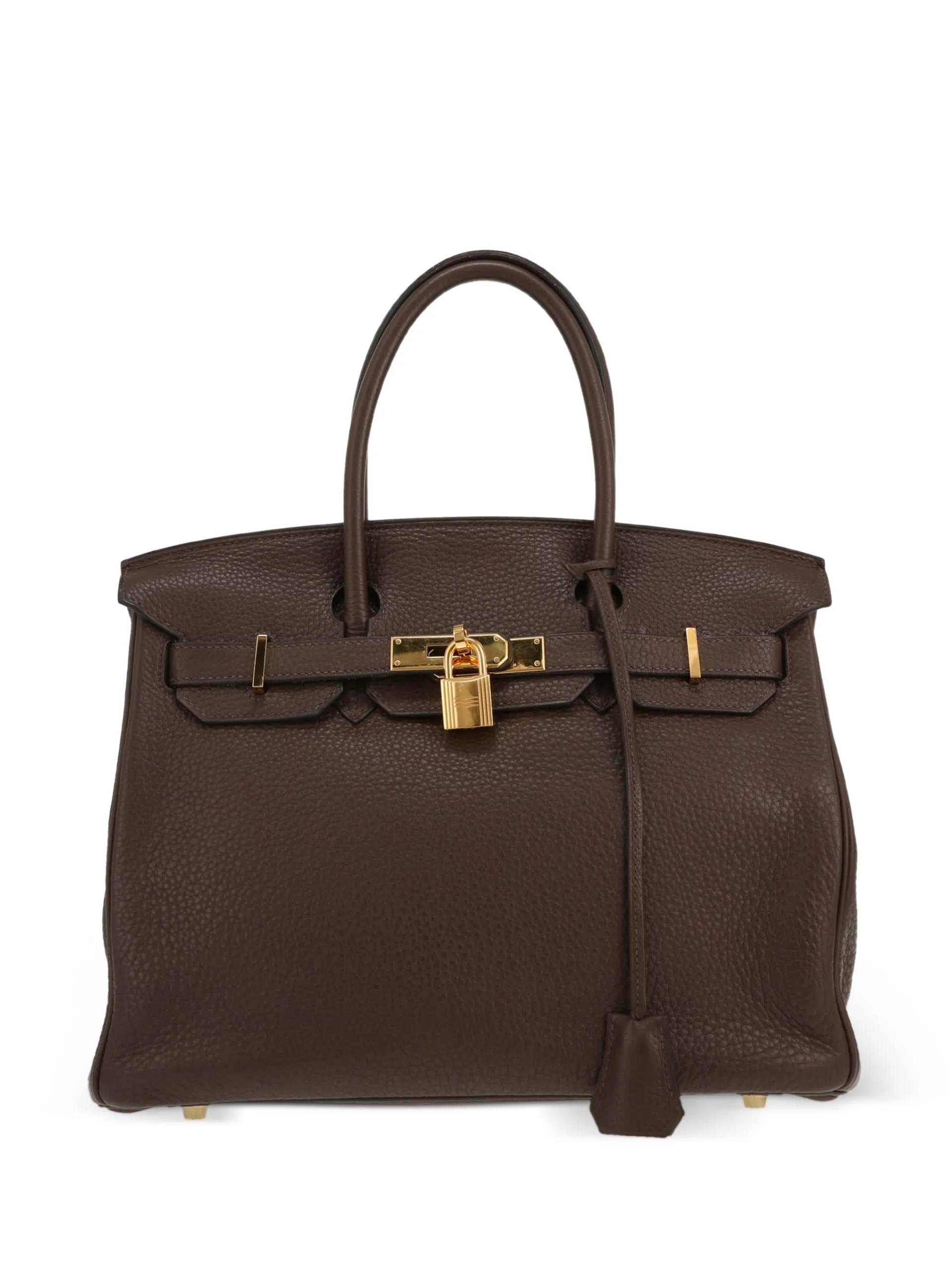
Hermès Birkin 30
The Birkin is, in practical terms, a top-handle tote with a flap closure, two handles, and a removable shoulder strap — a shape that existed before the Birkin and will exist after it. What makes it distinct is the quality of the materials and the fact that each bag is made by a single craftsperson from start to finish. The 30cm size is the most versatile: large enough for a tablet and a small notebook, small enough not to overwhelm a slight frame. It suits someone who wants a bag that is recognizable without being loud and who values the craft story behind the purchase.
Hermès Kelly Sellier 25
The Kelly is a structured, top-handle bag with a distinctive turn-lock closure and a removable shoulder strap. The Sellier construction means the bag is built with visible external stitching and reinforced edges, which gives it a sharper silhouette than the softer Retourne version. The 25cm size is the most wearable for daily use — it fits a phone, a cardholder, keys, and a small cosmetic item without feeling miniature. It suits someone who dresses deliberately and wants a bag with architectural presence.
Gucci Jackie 1961
The Jackie is a curved shoulder bag with a single piston-lock closure — a shape that has remained largely unchanged since it was introduced at Gucci in the early 1960s. The current version of the bag retains the original proportions and the distinctive hardware. It works as a shoulder bag for the daytime and can be carried as a handheld bag for the evening. It suits someone who wants a bag with an archival story and a shape that does not read as trendy.
Louis Vuitton Neverfull MM
The Neverfull is an open-top tote in Louis Vuitton’s signature coated canvas, with side laces that can be cinched to change the bag’s silhouette from wide to tapered. The MM size fits a laptop, a notebook, and daily essentials without overstuffing. It has earned its place as the default work tote for a generation not because of novelty but because of reliability — the coated canvas sheds rain, the interior is surprisingly capacious for the exterior dimensions, and the bag weighs almost nothing empty. It suits someone who carries a laptop daily and wants a bag that does its job without fuss.
Gucci Horsebit 1955
The Horsebit 1955 is a structured shoulder bag with a flap closure and the house’s signature horsebit hardware — a motif that has appeared in Gucci’s collections since the 1950s. Unlike the Jackie, which is curved and soft, the Horsebit has a more rectangular, architectural shape that reads as more formal. It works particularly well with tailoring and structured coats. It suits someone whose style leans toward the polished end of the quiet-luxury spectrum.
Hermès Constance
The Constance is a compact shoulder bag with a signature H-shaped clasp — a design that is simple in concept but precise in execution. The bag sits close to the body and works well as a day-to-evening option: it holds more than a clutch but looks as deliberate. In smooth leather, it has the quiet presence of a piece of jewelry rather than the volume of a handbag. It suits someone who carries minimally and values proportion over capacity.
Louis Vuitton Capucines BB
The Capucines is Louis Vuitton’s top-handle bag built in full-grain leather rather than the house’s more commonly seen coated canvas — a departure that signals a different intention. The BB size is compact but functional, with a top handle and a removable shoulder strap. The flap can be worn two ways: over the LV initial for a more understated look, or tucked behind it to reveal the hardware. It suits someone who wants a polished, top-handle bag from a heritage house but prefers leather over monogram.
Gucci Dionysus Medium
The Dionysus is a flap-front shoulder bag with a distinctive tiger-head clasp — a reference to the Greek god Dionysus, who in myth crossed the Tigris river on the back of a tiger. The medium size provides a practical interior with multiple compartments. It is one of the few designer bags that manages to be both structured and soft: the frame keeps its shape, but the body has enough give to sit comfortably against the hip. It suits someone who wants a bag with narrative without sacrificing everyday utility.
Hermès Evelyne TPM
The Evelyne is a crossbody bag originally designed for the equestrian market — the perforated H on the front was intended to face inward, against the body, a detail that most wearers now ignore. The TPM is the smallest size: it holds a phone, a cardholder, and keys, and that is about it. It is the bag you reach for when you do not want to carry a bag — light enough to forget you are wearing it. It suits someone who wants the most minimal possible carry without sacrificing the quality of the object itself.
The Milano Tote
The Milano Tote is a clean-lined leather tote from our own edit — the shape is simple, the leather is full-grain, and the proportions are calibrated to work as both a work bag and a weekend carry. It does not have a logo or a signature clasp, and that is the point: it is designed to blend into your existing wardrobe rather than announce itself. It suits someone who wants a leather tote that looks like it belongs to them rather than to a specific season’s campaign.
How to Choose Among Them
If you are choosing your first designer bag, prioritize the silhouette you actually use. If you reach for a crossbody daily, the Evelyne TPM or the Constance will see more wear than a Birkin. If you carry a laptop, the Neverfull MM or the Milano Tote is the practical place to start. If you want a bag that transitions between day and evening, the Kelly Sellier 25 or the Gucci Jackie 1961 spans both contexts easily. If you are adding to an existing collection, choose the bag that fills a gap in silhouette rather than the bag that feels most exciting in the moment — the bag that fills a gap gets used; the bag that overlaps with something you already own tends to sit.
For deeper guidance on choosing the right bag for your daily life, see our guides to choosing a crossbody bag and choosing a tote bag.
Which designer bag is the most versatile?
Among the ten, the Gucci Jackie 1961 and the Louis Vuitton Neverfull MM are the most versatile — the Jackie spans day and evening with its curved, archival shape, while the Neverfull handles workdays, travel, and weekends with its lightweight coated canvas and generous capacity.
Should a first designer bag be classic or trend-led?
Choose a classic silhouette — something that has been in production for at least a decade. A trend-led bag dates itself within two to three seasons. A classic bag, like the Hermès Kelly or the Gucci Horsebit 1955, remains legible regardless of what else is being shown that season.
How do I decide between a tote and a shoulder bag?
Match the bag to what you actually carry daily, not what you wish you carried. If a laptop or a substantial notebook is part of your daily kit, choose a tote. If you carry a phone, wallet, keys, and one or two small extras, a shoulder bag or crossbody is both more comfortable and more deliberate.